
One of the things I am most passionate about in my work is supporting female athletes through the different stages of their lives. Postpartum strength is a key area.
Women shouldn’t have to choose between their health, motherhood and their sporting goals. Our role as coaches and practitioners is to help women navigate these changes while continuing to develop, maintain and rebuild their physical capacity.
Pregnancy and childbirth don’t have to mean the end of an athlete’s sporting journey. For many women, they are simply another chapter. But returning to sport postpartum requires more than being medically cleared to exercise. It requires rebuilding the physical capacity to meet the demands of the sport—and that process starts during pregnancy.
Pregnancy is not a pause
For a long time, pregnancy was viewed as an interruption to an athlete’s career: stop training, have the baby, recover, then start again.
I think we can do better than that.
For women with uncomplicated pregnancies and no medical or obstetric contraindications, exercise can generally continue throughout pregnancy, with appropriate modifications.
The goal isn’t necessarily to maintain pre-pregnancy performance. Pregnancy brings significant physiological and biomechanical changes, and training needs to evolve with the athlete.
Instead, the goal is to maintain appropriate physical capacity and exposure where possible.
That might mean modifying load, volume, intensity, impact or exercise selection. The question shouldn’t simply be, “Can she still do this?” It should be, “What adaptation are we trying to achieve, and how can we achieve it appropriately at this stage of pregnancy?”
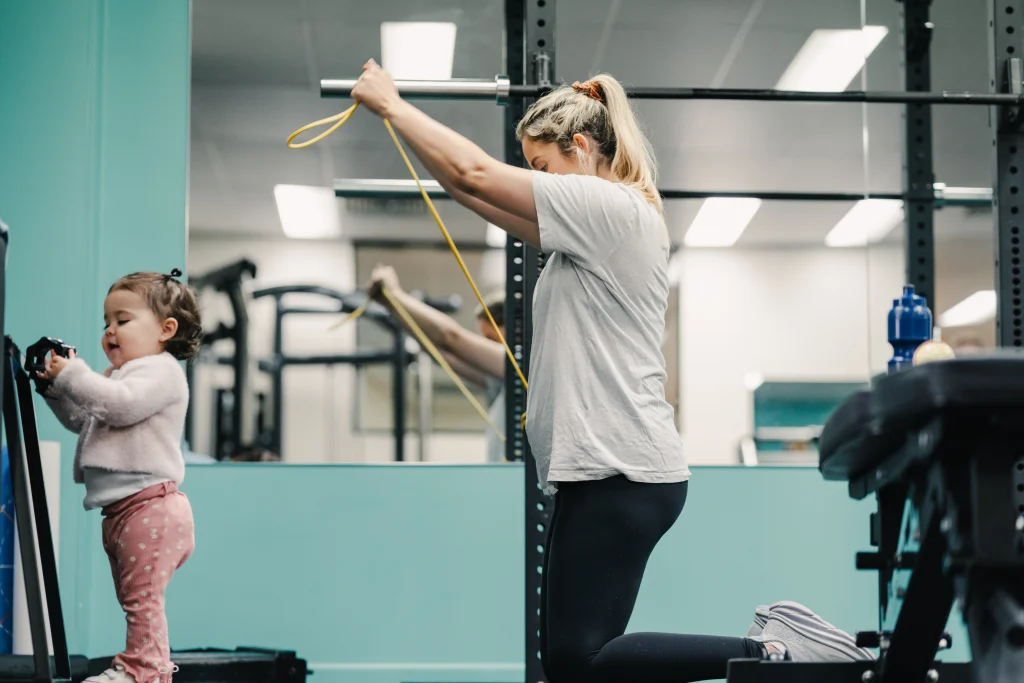
The longer the break, the greater the reload
One of the most important principles when working with postpartum athletes is the relationship between time away from a physical demand and the amount of capacity that needs to be rebuilt.
This isn’t a formula, but exposure matters.
If an athlete maintains appropriate exposure to a physical quality during pregnancy, she may have less capacity to rebuild postpartum than an athlete who has been completely removed from that demand for many months.
Consider a netballer.
One athlete may maintain appropriate running exposure throughout pregnancy, progressively modifying volume, speed and impact.
Another may need to stop running and playing at 16 weeks because of symptoms. At that point, I would ask: how can we continue to appropriately load the tissues and physical qualities required for her eventual return, even if she can no longer run or play?
Depending on the athlete and her symptoms, this might include assisted jump work, modified landing activities or sprint wall drills. The aim isn’t to force an athlete to continue an activity that isn’t appropriate. It is to find alternative ways to maintain as much relevant capacity as possible within her current tolerance.
The athlete who has been away from running for longer has more to reload.
The same applies to high-speed running, acceleration and deceleration, jumping and landing, change of direction, strength and repeated high-intensity efforts.
Returning to sport isn’t simply about how long it has been since the birth. It’s also about how long it has been since the athlete was exposed to the demands of her sport.
Clearance isn’t readiness
An athlete can be medically cleared to exercise without being ready for the demands of competition.
These are different stages: medical clearance, general exercise, strength and conditioning, sport-specific preparation and finally, return to performance.
A netballer may be able to jog comfortably but still not be ready for repeated accelerations, hard decelerations, jumping, landing and changes of direction.
This is also where I see pelvic health physiotherapy referrals as an important part of supporting female athletes during pregnancy and postpartum.
If an athlete is experiencing pelvic floor symptoms, pain, heaviness, leakage, abdominal symptoms or uncertainty around her return, a pelvic health physiotherapist can provide valuable assessment and guidance. Working collaboratively allows us to understand what the athlete can tolerate and how we can continue progressing towards her goals.
I don’t believe the S&C coach should work in isolation. Having the right team around the athlete can make a significant difference to both confidence and the quality of the return.
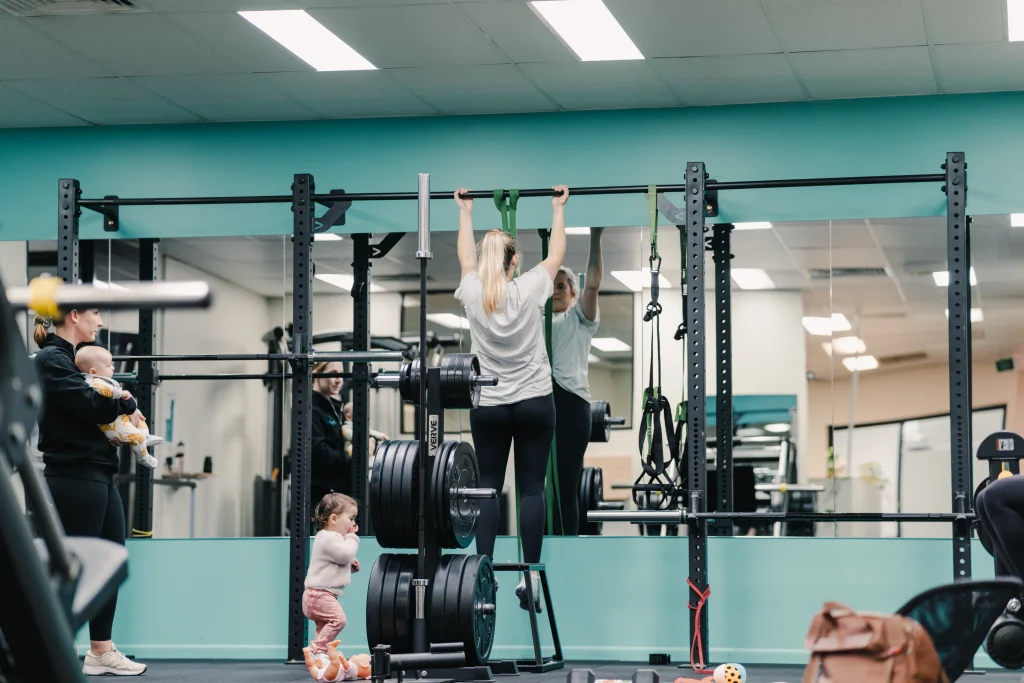
Postpartum training starts from current capacity
One of the biggest mistakes we can make is programming from the athlete’s pre-pregnancy numbers.
She may have previously squatted 100 kg, sprinted at a particular speed or completed repeated maximal efforts.
That tells us what she could do. It doesn’t necessarily tell us what she can tolerate now.
Instead, we need to thing about the following :
- What has she maintained?
- What has she lost?
- What symptoms are present?
- What does she currently tolerate?
- What does her sport require?
Those answers should determine the starting point.
The return might progress from walking, to running, to faster running, acceleration, deceleration, change of direction, repeated efforts, sport-specific training and eventually competition.
The exact progression will be different for every athlete. The principle is the same: progressively earn the next exposure.
Physical health supports psychological wellbeing
The postpartum return isn’t only about physical capacity. For many women, sport and exercise are an important part of who they are. They can provide connection, confidence, routine, identity and a sense of normality at a time when almost everything else has changed.
Being able to participate safely and without pain can be incredibly valuable.
Returning to the gym, going for a run, getting back to a team or simply moving again can help women reconnect with something they love and with a part of themselves that may have felt temporarily lost.
We aren’t just rebuilding an athlete’s physical capacity—we are helping her reconnect with the activities that are important to her.
This doesn’t mean exercise is the answer to every postpartum mental health challenge. Mental health concerns should always be taken seriously and supported by the appropriate health professionals.
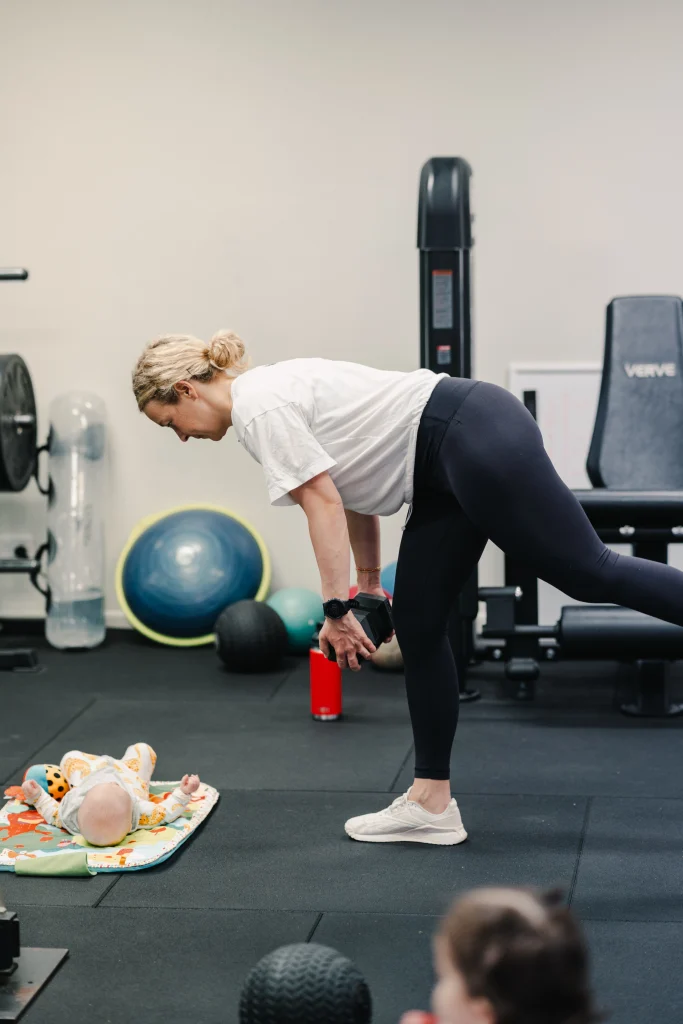
Return to performance – not a date
Two athletes who are both 12 weeks postpartum can have very different levels of capacity.
Their pregnancy training history, birth experience, symptoms, sleep, current training exposure and sporting demands may all be different.
Rather than asking, “When can she return?”, we should ask, “What does she need to be able to do to return well?”
For me, this is bigger than postpartum.
Female athletes move through many stages across their sporting lives—from adolescence through pregnancy, postpartum and eventually menopause. Each stage brings different considerations, but the underlying principle remains the same: meet the athlete where she is, understand what her body is experiencing, and continue to find ways to develop her capacity.
Pregnancy doesn’t have to be a pause in an athlete’s development.
Postpartum doesn’t have to mean starting again.
Our job is to help women continue to move, train, perform and pursue the things they love through all of them.
If you’re pregnant and want support with your exercise and training throughout pregnancy, or want to start preparing for your return to sport postpartum, I’d love to help you through that journey.
When you book an Initial Consult with me at SportsPlus Physiotherapy, we’re currently offering one 30-minute massage with our pregnancy massage therapist as part of your care.
Training during pregnancy and postpartum should always be individualised, particularly where medical or obstetric complications, pelvic health symptoms or other concerns are present. Appropriate medical and allied health advice should be sought where required.

