
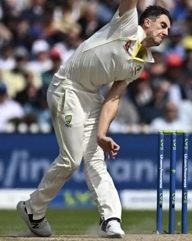
Fast bowling is one of the most physically demanding movements in sport. Every delivery begins with a 20–25 metre run-up, where elite bowlers accelerate to speeds greater than 20 km/h before rapidly transferring force through the legs, trunk and upper body to deliver the ball at speeds exceeding 140 km/h. While this generates exceptional pace, it also places enormous stress on the muscles of the trunk, particularly the internal oblique, making side strains one of the most common injuries in cricket.
Understanding the biomechanics of the bowling action helps explain why these injuries occur and, more importantly, how they can be reduced.
What is a side strain?
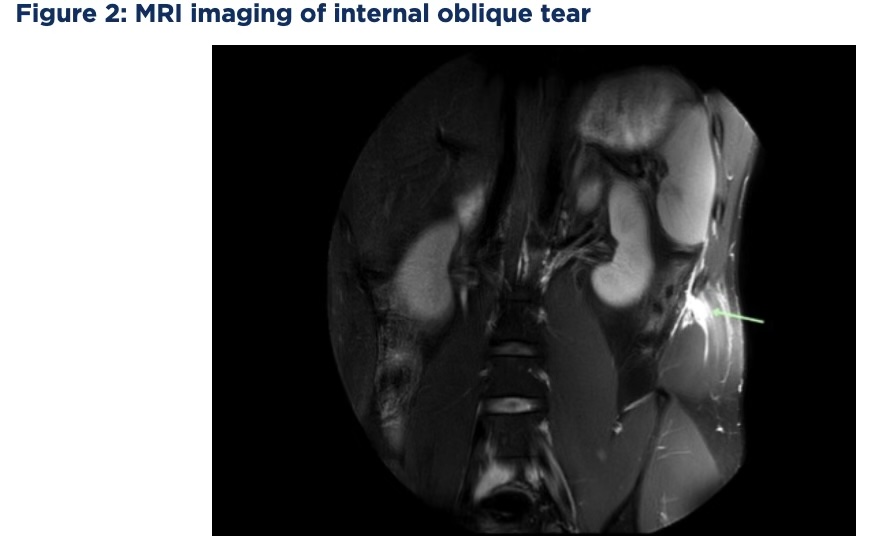
A side strain is an injury to the muscles on the side of your abdomen, most commonly the internal oblique. It may also involve the muscles between the ribs.
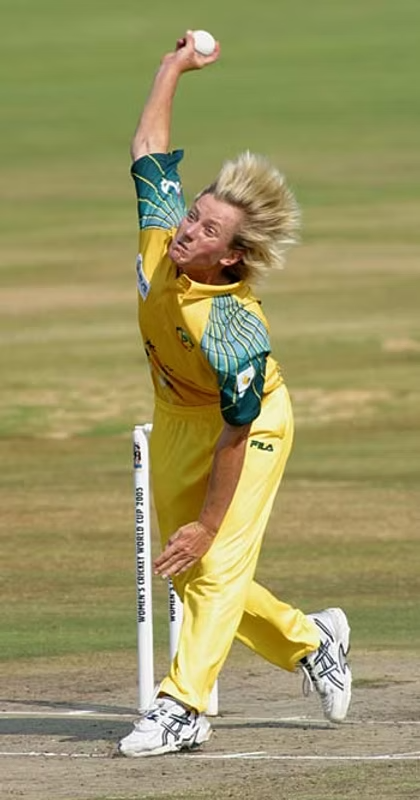
In fast bowlers, the injury usually occurs on the side opposite the bowling arm during ball release. As the front arm pulls down, the trunk rapidly rotates and bends sideways, placing significant stress on these muscles. If that stress becomes greater than the muscle can handle, a side strain can occur.
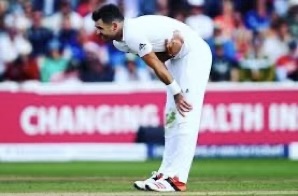
These injuries are common at every level of cricket and often require 4-8 weeks or more of rehabilitation before return to sport, depending on the severity of the injury.
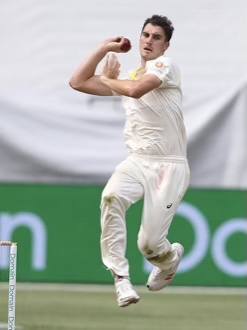
Why does bowling place so much stress on the trunk?
Fast bowling isn’t simply an arm action; it’s a full body movement that relies on efficient force transfer through the kinetic chain. Each phase of the bowling action contributes to both performance and injury risk.
Phase 1: The Run-Up
The run-up builds speed and sets the foundation for the entire bowling action. Elite fast bowlers reach speeds of around 6 to 8 meters per second, using the legs and the core to generate force while staying controlled and balanced.
Phase 2: The Pre-Delivery Bound
The pre-delivery bound helps transfer momentum into the bowling action. During this phase, the body stores energy that is released during ball delivery to help generate speed.
Good body position during the bound is important, as poor control can place extra stress on the trunk later in the bowling action.
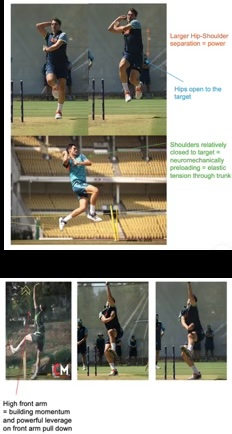
Phase 3: Back Foot Contact
Back foot contact is where the body begins transferring force from the ground through the legs and into the trunk.
A strong, stable position during this phase helps generate ball speed while reducing unnecessary stress on the body.
Phase 4: Front Foot Contact
Front foot contact is arguably the most important phase for both performance and injury risk.
As the front foot lands, the body rapidly slows down, allowing force to be transferred up through the trunk. At this point, forces can reach 5 to 9 times body weight. This places significant stress on the abdominal muscles, particularly the internal oblique on the opposite side of the bowling arm, as it works to control the rapid rotation of the trunk.
Phase 5: Ball Release and Follow Through
Ball release is the highest risk phase for a side strain.
As the front arm pulls down, the trunk rapidly rotates and bends sideways to generate ball speed. This places a large amount of stress on the oblique muscle on the opposite side of the bowling arm.
When these high forces are repeated over many deliveries, or the muscle isn’t prepared for the workload, the tissue can become overloaded, and a side strain can occur.
Why do side strains keep happening?
Side strains rarely occur because of one poor delivery. More commonly, they develop when repeated bowling loads exceed the trunk’s ability to tolerate high-speed rotational forces.
Several factors can increase the risk, including:
- Rapid increases in bowling workload
- Repeated bowling spells and accumulated fatigue
- Poor trunk strength or rotational control
- Returning to bowling too quickly after injury
- Reduced tolerance to high-speed eccentric trunk loading
Research suggests that approximately half of all fast bowlers will experience a side strain during their career, with recurrence rates approaching 30% within the same season. This makes appropriate rehabilitation and workload management essential.
Can side strains be prevented?
While no injury is completely preventable, athletes can significantly reduce their risk by preparing the body for the demands of fast bowling.
Key strategies include:
- Progressively increasing bowling workloads
- Maintaining trunk, hip and posterior chain strength
- Developing rotational power and control
- Building tolerance to repeated bowling spells rather than relying solely on gym strength
- Allowing adequate recovery during periods of high bowling volume
For athletes returning from injury, rehabilitation should progressively restore the trunk’s ability to tolerate the high rotational velocities and eccentric forces experienced during front foot contact and ball release before returning to match bowling.
The key takeaways
Fast bowling is one of the most explosive movements in sport. While the arm delivers the ball, the trunk is responsible for transferring and controlling enormous forces generated throughout the bowling action.
Understanding the biomechanics behind each phase helps explain why side strains are so common and why successful rehabilitation requires more than simply waiting for the pain to settle.
If you’re experiencing side pain while bowling or are returning from a side strain, our physiotherapists can assess your bowling mechanics, identify contributing factors and guide a safe return to cricket.
References
- Alway, P., Felton, P., Brooke-Wavell, K., Peirce, N., & King, M. (2021). Cricket Fast Bowling Technique and Lumbar Bone Stress Injury. Medicine & Science in Sports & Exercise. https://doi.org/10.1249/MSS.0000000000002512
- Andrews, M., Gorman, A., & Crowther, R. (2024). Functional movement variability to maintain delivery speed in cricket fast bowling. European Journal of Sport Science, 24, 415–421. https://doi.org/10.1002/ejsc.12045
- Bhandurge, S., Alway, P., Allen, S., Blenkinsop, G., & King, M. (2024). Technique variables associated with fast bowling performance: A systematic-narrative review. Applied Sciences, 14, 6752. https://doi.org/10.3390/app14156752
- Doma, K., Leicht, A., Woods, C., Harrison, D., McGuckin, T., & Connor, J. (2021). Effect of exercise-induced muscle damage on bowling-specific motor skills in male adolescent cricketers. Sports, 9(7), 103. https://doi.org/10.3390/sports9070103
- Felton, P., Lister, S., Worthington, P., & King, M. (2018). Comparison of biomechanical characteristics between male and female elite fast bowlers. Journal of Sports Sciences, 37, 665–670. https://doi.org/10.1080/02640414.2018.1522700
- Felton, P., McCaig, S., & King, M. (2023). Cricket fast bowling: The relationship between range of motion and key performance and injury technique characteristics. Journal of Sports Sciences, 41, 112–120. https://doi.org/10.1080/02640414.2023.2200520
- Fleming, J., Perrett, C., Melchi, O., McClelland, J., & Middleton, K. (2024). Quantification of ground reaction forces during the follow through in trained male cricket fast bowlers: A laboratory-based study. Sports, 12(12), 316. https://doi.org/10.3390/sports12120316
- Jacobs, J., Olivier, B., Brandt, C., & Boulle, N. (2024). Anthropometric and biomechanical factors in elite male and female fast bowlers. Journal of Biomechanics, 170, 112157. https://doi.org/10.1016/j.jbiomech.2024.112157
- Kiely, N., Rodriguez, L., Watsford, M., Reddin, T., Hardy, S., & Duffield, R. (2021). The influence of technique and physical capacity on ball release speed in cricket fast-bowling. Journal of Sports Sciences, 39, 2361–2369. https://doi.org/10.1080/02640414.2021.1933349
- Kirthen, H., Sudha, G., Raman, S. A., Chelladurai, A., Abba, S., Varghese, J. G., & Thiagarajan, K. A. (2025). Musculoskeletal screening of the lumbopelvic complex among male university-level fast bowlers: A cross-sectional study. Cureus, 17(6), e85514. https://doi.org/10.7759/cureus.85514
- Olivier, B., & Orchard, J. W. (2025). Cricket sports medicine (1st ed.). Springer Nature Singapore. https://doi.org/10.1007/978-981-96-6321-7
- Orchard, J. W., Blanch, P., Paoloni, J., Kountouris, A., Sims, K., Orchard, J. J., & Brukner, P. (2015). Fast bowling match workloads over 5–26 days and risk of injury in the following month. Journal of Science and Medicine in Sport, 18(1), 26–30. https://doi.org/10.1016/j.jsams.2014.09.002
- Ramachandran, A. K., Singh, U., Connor, J. D., & Doma, K. (2024). Biomechanical and physical determinants of bowling speed in cricket: A novel approach to systematic review and meta-analysis of correlational data. Sports Biomechanics, 23(3), 347–369. https://doi.org/10.1080/14763141.2020.1858152
- Sandhu, R. S., & Singh, G. (2024). Comparative biomechanical analysis of front-on, side-on, and mixed bowling actions in fast bowlers. Journal of Computational Analysis and Applications, 33(8), 5574–5587. https://doi.org/10.48047/jocaaa.2024.33.08.199
- Worthington, P. J. (2010). A biomechanical analysis of fast bowling in cricket. [Doctoral dissertation].
- Chelladurai, A., Raman, S. A., Kirthen, H., Nandana, A., Thiruvengadam, G., Nimishaanth, S. S., Thiagarajan, K. A., & Sivaraman, A. (2026). Quantifying workload and injury risk among cricket fast bowlers: A systematic review and meta-analysis.

