
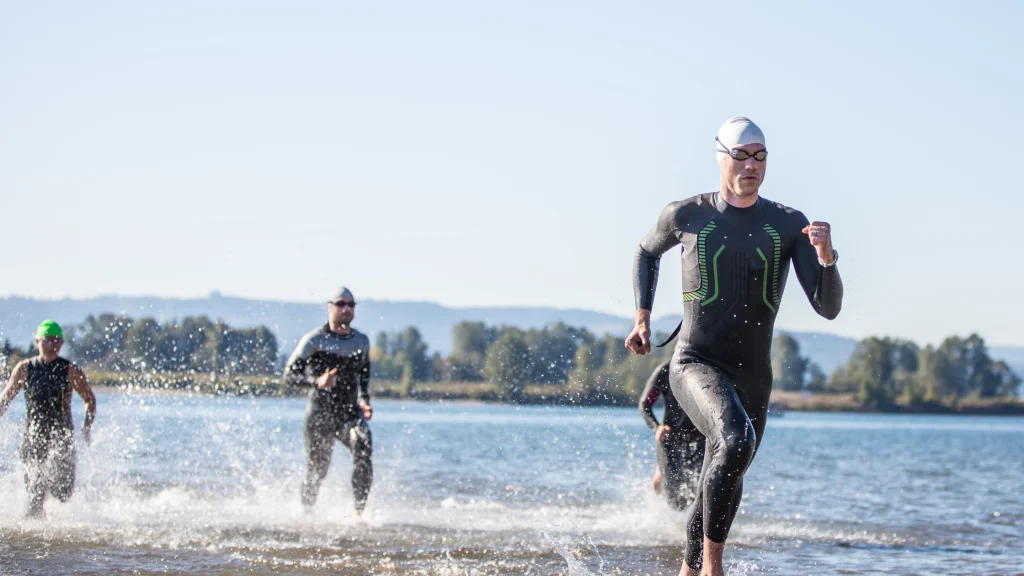
Triathlon is a multi-sport endurance event that gained increasing popularity over the past decades. Athletes compete by completing a swim leg, then transition to the bike, then transition to the run. The transitions are often called T1 (swim-to-bike) and T2 (bike-to-run), and managing those well is part of a good race strategy. The most common triathlon distances are:
| Categories | Swim | Bike | Run |
| Sprint | 750 m | 20 km | 5 km |
| Olympic | 1500 m | 40 km | 10 km |
| Half-Ironman | 1.9 km | 90 km | 21.1 km |
| Ironman | 3.8 km | 180km | 42.2 km |
Strength Training & Triathlon

Strength training is no longer just a “nice add-on” for triathletes, it’s a proven way to boost performance across all three disciplines. Integrating structured resistance work into a triathlon program improves both cycling and running economy, meaning athletes can sustain faster speeds with less energy.
A recent study on elite female triathletes reported up to a 3–4% improvement in short-distance triathlon performance after just eight weeks of combined strength and endurance training (Zhang et al., 2025). Moreover, Blagrove et al’s (2023) meta-analysis also confirmed that high-load resistance training produces meaningful improvements in running economy, particularly at higher speeds. These seemingly small margins add up to major time savings over race distances, while also reducing injury risk and enhancing durability. For triathletes chasing personal bests or aiming to race stronger for longer, consistent strength training is an essential piece of the puzzle.
Triathlon Injuries
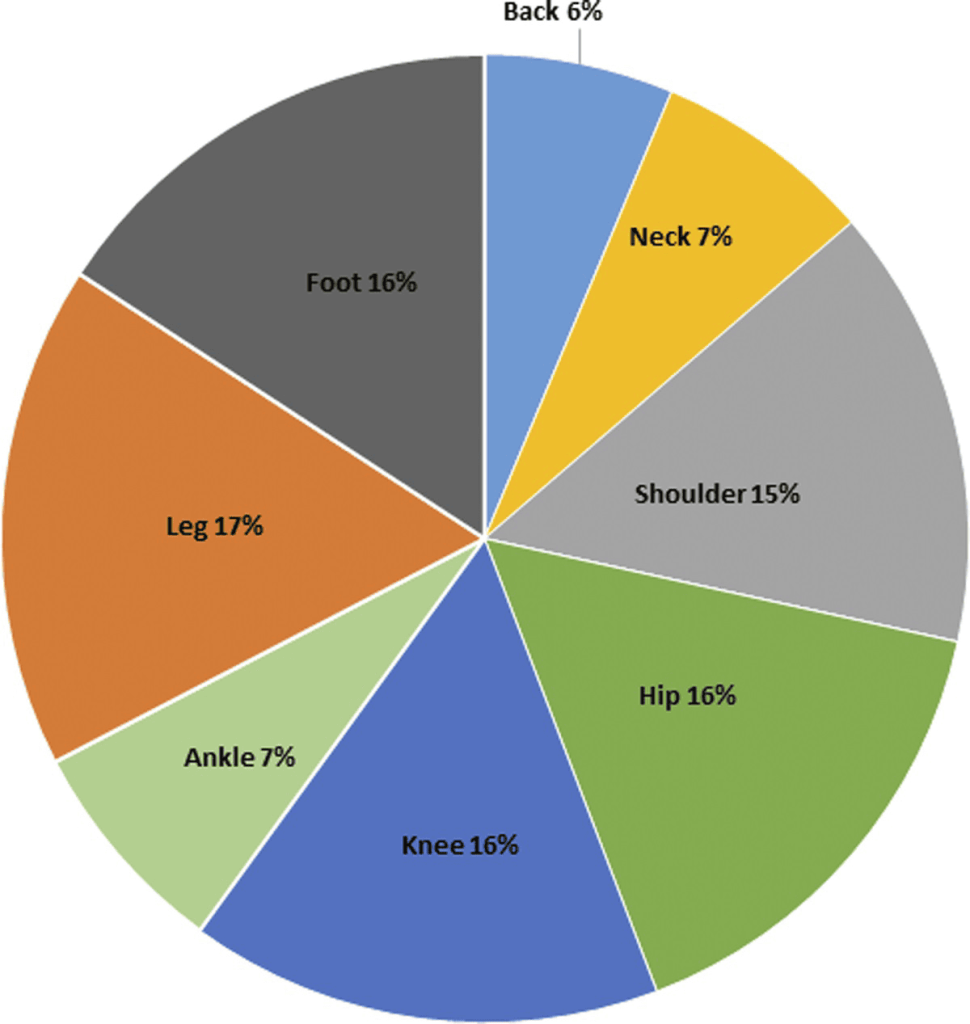
Triathletes experience different injury risks depending on the discipline, and research consistently shows that upper limb injuries are most common in swimming, while lower limb injuries dominate in cycling and running. In the water, the repetitive overhead motion of freestyle places high stress on the shoulder, making conditions such as rotator cuff tendinopathy, bursitis, and labral tears common, alongside elbow overuse injuries like medial and lateral epicondylitis (Bales & Bales, 2012). These often stem from poor technique, inadequate core engagement, or high training loads.
On land, the picture shifts: the repetitive, weight-bearing demands of cycling and running mean that injuries cluster in the lower body. Patellofemoral pain syndrome, iliotibial band friction syndrome, Achilles tendinopathy, and plantar fasciitis are frequently reported, along with hip bursitis and labralpathology (Raghunandan et al., 2021; Rhind et al., 2022). These issues are often linked to biomechanical overload, poor bike fit, or running gait inefficiencies. Together, this highlights the need for triathletes to adopt discipline-specific injury prevention strategies — refining swim technique to protect the shoulders and elbows, while ensuring proper bike setup, strength balance, and running mechanics to safeguard the hips, knees, and ankles (Kienstra et al, 2021).
Staying on Top of Training & Injury Management
Whether you want to improve your triathlon times, get rid of your aches and pains, or understand your body better, we’ve got you covered! At SportsPlus Physiotherapy, we offer a wide range of services including strength & conditioning, physiotherapy, remedial massage and athletic screening. Contact us for more details!
References
Bales, J., & Bales, K. (2012). Swimming, a combat sport? Current Sports Medicine Reports, 11(6), 291–295. https://doi.org/10.1249/JSR.0b013e3182781f4d
Raghunandan, A., Charnoff, J. N., & Matsuwaka, S. T. (2021). The epidemiology, risk factors, and nonsurgical treatment of injuries related to endurance running. Current Sports
Medicine Reports, 20(6), 306–311. https://doi.org/10.1249/JSR.0000000000000840
Rhind, J. H., Dass, D., Barnett, A., & Carmont, M. (2022). A systematic review of long‐distance triathlon musculoskeletal injuries. Journal of Human Kinetics, 81(1), 123–136. https://doi.org/10.2478/hukin-2022-0040
Blagrove, R. C., Brown, N., & Hayes, P. R. (2023). The effects of strength training on the physiological determinants of middle- and long-distance running performance: A systematic review and meta-analysis. Sports Medicine, 53(2), 267–291. https://doi.org/10.1007/s40279-023-01978-y
Kienstra, C. M., Cade, W. H., & Best, T. M. (2021). Training, injury, and lifestyle characteristics of recreational triathletes. Current Sports Medicine Reports, 20(2), 87–91. https://doi.org/10.1249/JSR.0000000000000807
Zhang, Y., Li, H., Wang, J., & Chen, X. (2025). Effects of concurrent strength and endurance training on performance in elite female triathletes. Journal of Strength and Conditioning Research, 39(1), 45–53. https://pubmed.ncbi.nlm.nih.gov/40802655/

